Bible words · King James Version
Biblical Meaning of Faith
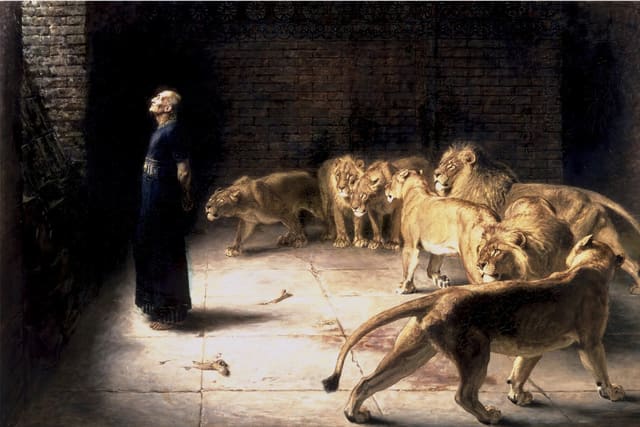
In the Bible, faith is trust in God: believing that what He says is true and relying on Him, especially on Jesus Christ for salvation. It is not a leap in the dark or a feeling of certainty. Faith rests on God’s faithfulness and His word, and it shows itself in obedience. The Bible says a person is saved by grace through faith, and that faith without works is dead.
Now faith is the substance of things hoped for, the evidence of things not seen.
Faith in Hebrew and Greek
Hebrew · Old Testament
אֱמוּנָה
ʼĕmûwnâh (em-oo-naw') · Strong’s H530
- Strong’s definition
- literally firmness; figuratively security; morally fidelity
- Translated in the King James Version as
- faith(-ful, -ly, -ness, (man)), set office, stability, steady, truly, truth, verily
Greek · New Testament
πίστις
pístis (pis'-tis) · Strong’s G4102
- Strong’s definition
- persuasion, i.e. credence; moral conviction (of religious truth, or the truthfulness of God or a religious teacher), especially reliance upon Christ for salvation; abstractly, constancy in such profession; by extension, the system of religious (Gospel) truth itself
- Translated in the King James Version as
- assurance, belief, believe, faith, fidelity
Hebrew and Greek words, definitions and King James renderings from James Strong’s Exhaustive Concordance of the Bible (1890), which is in the public domain.
In the King James Bible, “faith” appears 247 times in 231 verses: 2 in the Old Testament and 245 in the New. The first is Deuteronomy 32:20, and the book with the most is Romans (39).
Only Twice in the Old Testament
Here is something many readers never notice: the word faith appears only twice in the Old Testament of the King James Bible. The first is a sad one. In Moses’ song near the end of his life, God says of a stubborn generation that they are “children in whom is no faith” (Deuteronomy 32:20). The second is one of the most important sentences in Scripture:
Behold, his soul which is lifted up is not upright in him: but the just shall live by his faith.
The idea is everywhere in the Old Testament even where the word is not. Abraham’s story turns on it: “he believed in the LORD; and he counted it to him for righteousness” (Genesis 15:6). The Old Testament usually speaks of believing, trusting, waiting on the LORD and leaning on Him.
The Hebrew word in Habakkuk is ʼĕmûwnâh. Strong’s defines it as “literally firmness; figuratively security; morally fidelity,” and notes that the King James translators also rendered it faithful, faithfulness, stability, steady and truth. It belongs to the family of the verb ʼâman, which Strong’s explains as “to build up or support … to render (or be) firm or faithful, to trust or believe.” Biblical faith is not a vague feeling. It is leaning your weight on something firm. And the firmness belongs to God before it belongs to us: the believer’s faith rests on the LORD’s faithfulness.
Faith in the New Testament
In the New Testament the word becomes common. Of its 247 appearances in the King James Bible, 245 are in the New Testament. The Greek word is pístis, which Strong’s defines as “persuasion, i.e. credence; moral conviction (of religious truth, or the truthfulness of God …), especially reliance upon Christ for salvation.”
Two parts of that definition carry the meaning. Faith is being persuaded that something is true, and faith is relying on it. A person can agree that a bridge would hold them and still never step onto it. New Testament faith steps on.
Habakkuk’s sentence is quoted three times in the New Testament. Paul uses it to sum up the gospel:
For therein is the righteousness of God revealed from faith to faith: as it is written, The just shall live by faith.
What Hebrews 11:1 Means
The best-known description of faith in the Bible opens Hebrews 11:
Now faith is the substance of things hoped for, the evidence of things not seen.
“Substance” is the solid ground under something, what holds it up. “Evidence” is what proves a thing or convinces you of it. Faith treats God’s promises, which are still “hoped for” and “not seen,” as solid and proven, because God has made them. It is not wishing that something were true. It is acting on what God has said before you can see it.
The rest of the chapter shows what that looks like: Noah building an ark for a flood no one had yet seen, Abraham leaving home without knowing where he was going, Moses choosing to suffer with God’s people rather than enjoy Egypt’s treasures. And it states the rule plainly:
But without faith it is impossible to please him: for he that cometh to God must believe that he is, and that he is a rewarder of them that diligently seek him.
Where Faith Comes From
If faith is so important, where does a person get it? Paul’s answer is clear: “faith cometh by hearing, and hearing by the word of God” (Romans 10:17). Faith grows where God’s word is heard, read and believed. It is not worked up from inside. It is a response to what God says.
That is why faith is also called a gift. Ephesians says “by grace are ye saved through faith” (Ephesians 2:8), and adds that this is not of ourselves. Hebrews calls Jesus “the author and finisher of our faith” (Hebrews 12:2): He begins it and He brings it to completion.
Small Faith and Growing Faith
The Gospels are full of people with imperfect faith, and Jesus does not turn them away. A father whose son was tormented cried out what many believers have felt:
And straightway the father of the child cried out, and said with tears, Lord, I believe; help thou mine unbelief.
Jesus healed the boy. The apostles themselves asked, “Increase our faith” (Luke 17:5). And Jesus told His disciples that faith “as a grain of mustard seed” (Matthew 17:20) could move a mountain. The power is never in the size of the faith but in the God it trusts. Small faith in a great God is enough to begin.
Faith and Works
James wrote to believers who said they had faith but showed no change in how they lived. His answer is blunt:
17 Even so faith, if it hath not works, is dead, being alone. 18 Yea, a man may say, Thou hast faith, and I have works: shew me thy faith without thy works, and I will shew thee my faith by my works.
Some readers think James and Paul disagree. They do not. Paul says we are made right with God by faith and not by our works. James says the faith that saves is never alone; it always produces works, as a living body always breathes. Paul is talking about the root; James is talking about the fruit. Both quote the same verse about Abraham believing God. Both would say that true faith obeys.
Faith in the Bible, then, is trusting God enough to take Him at His word and to live by it. It begins small, it grows by hearing His word, and it holds on because He holds on.
A Prayer for Faith
Father, I believe; help my unbelief. Thank you that my faith rests on your faithfulness and not on the strength of my feelings. Speak to me through your word, and let faith grow as I hear it. Teach me to trust you before I can see how you will keep your promises, and to show that trust in how I live. When my faith is small, remind me that you are great. Keep me looking to your Son, the author and finisher of my faith. In Jesus’ name, Amen.
This prayer is an example to help you find words. Speak to your Father from your heart, in your own words, through His Son, in Jesus’ name, as Jesus taught (John 16:23).
Share This Verse
A picture of Hebrews 11:1 with the meaning of faith, for Pinterest, Facebook or your phone.
